








DEFECT REJECTION SOLUTIONS

In automated production, defect rejection is a critical step that helps ensure a 100% qualified product rate. HOACO’s defect rejection mechanisms are typically triggered by vision inspection results or registration marks. The rejection method is selected according to product characteristics, product size, material properties, production speed, and other requirements. HOACO offers the following rejection solutions, and can also design a customized solution to meet specific customer needs.

ASYNCHRONOUS LAMINATION ROLLER

PRODUCT
OVERVIEW

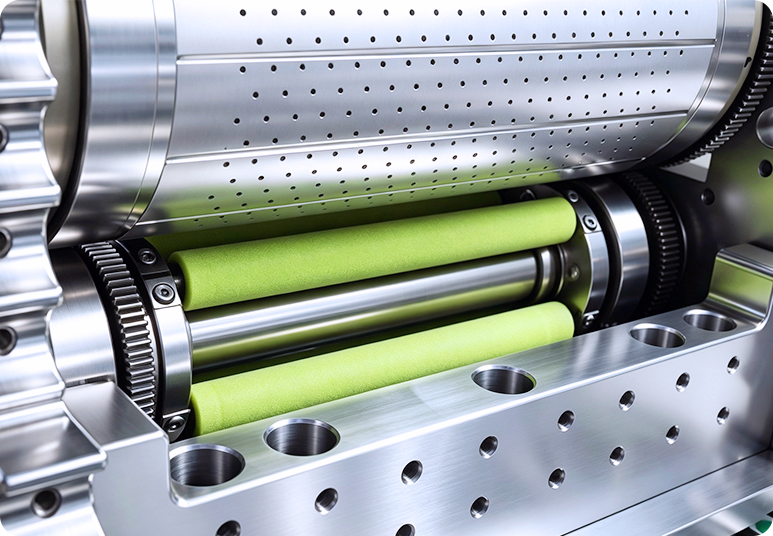
Works together with the vacuum transfer roller. An adhesive-backed liner is lifted from below by a mechanism, pressing the good products from the vacuum roller surface onto the liner. When a defect is detected, the mechanism lowers so that the defective product is not laminated to the liner — it remains on the vacuum roller surface and is carried away separately.

Primarily used for rejecting defective RFID antennas.

Rejection speed: 30 m/min.
FLIP PLATE REJECTION DEVICE

PRODUCT
OVERVIEW

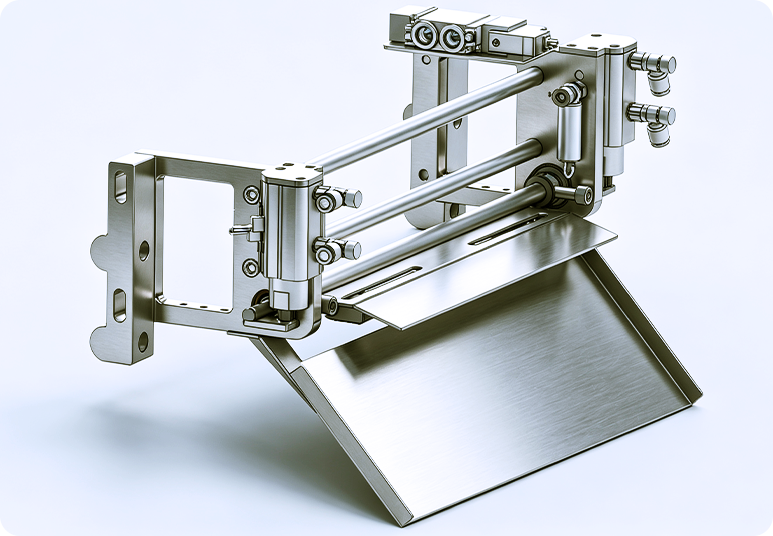
Can be installed on a station. If the product is half-cut (kiss-cut), it can be transported to the stripping blade position via a low-tack liner for rejection. Cylinders on both sides drive the swing of a baffle plate to change the product’s conveying path, achieving rejection. Applications: sheet-form products that are both flexible and have a degree of rigidity, such as rubber/clay thermal pad . An economical solution.

AIR-BLOW REJECTION

PRODUCT
OVERVIEW

Enables fast rejection of defective products.

Rejection speed: 30 m/min.

Mainly used for packaged products in the medical industry.
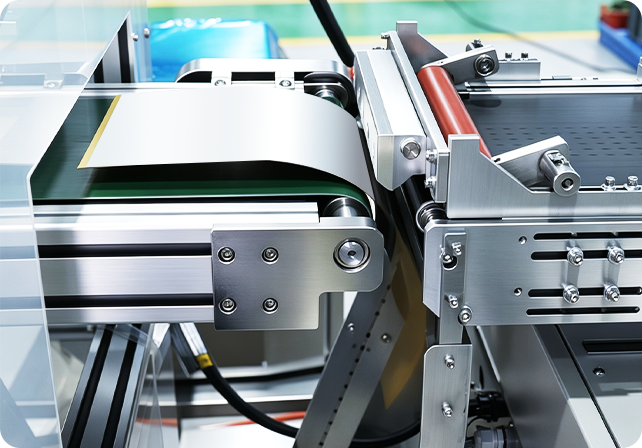
CONVEYOR REJECTION

PRODUCT
OVERVIEW

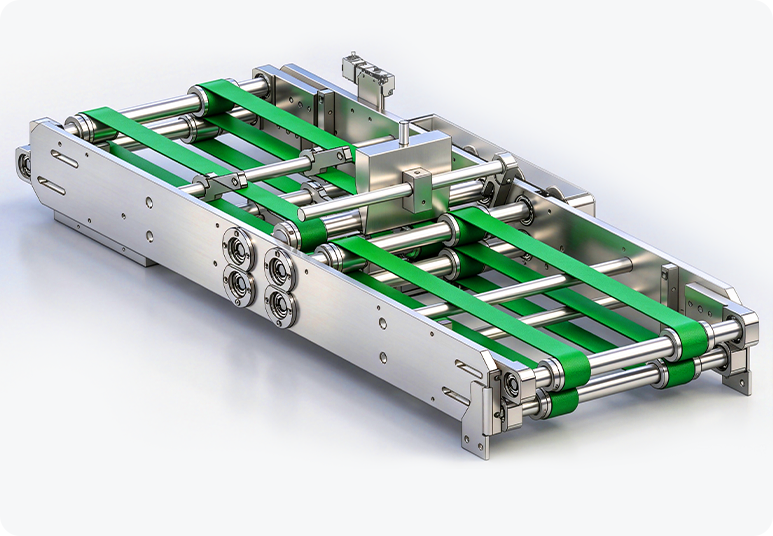
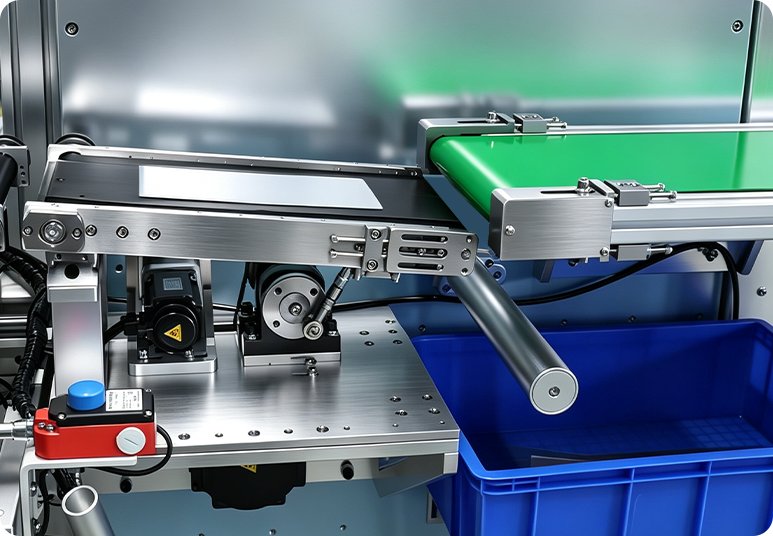
One end of the conveyor is connected to a motor. When a defect signal is triggered, the motor tilts that end of the belt downward, carrying the defective product off the production line.

Applications: mainly for large products, typically longer than 200 mm.

Speed: less than 20 m/min.

Advantages: does not damage the defective product, allowing for manual secondary inspection or verification.
PUSH ROD REJECTION

PRODUCT
OVERVIEW

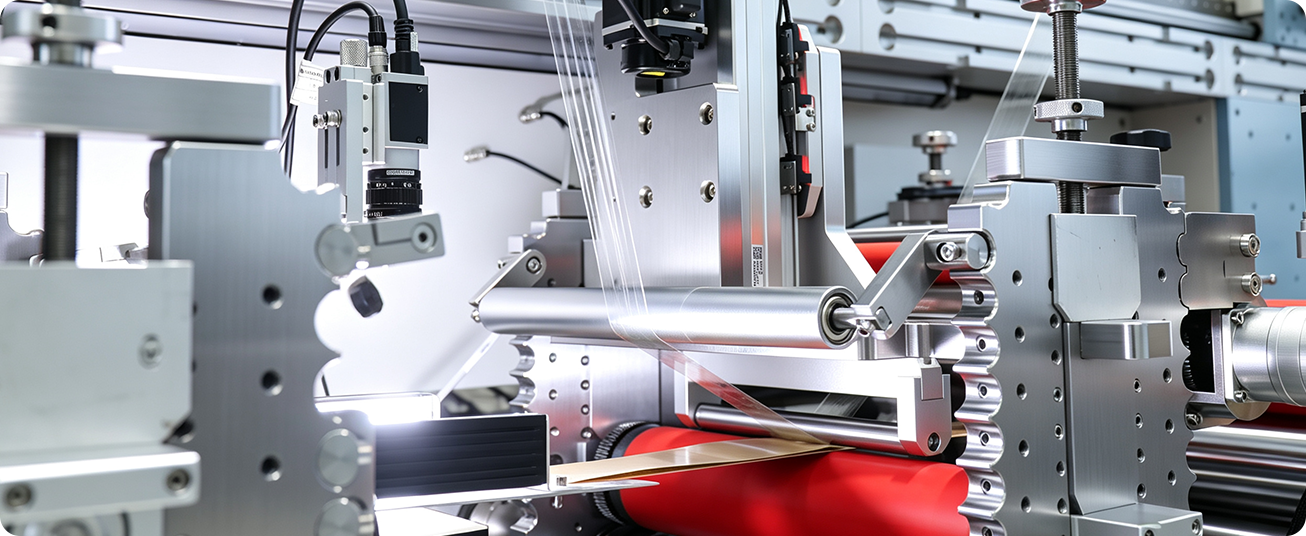
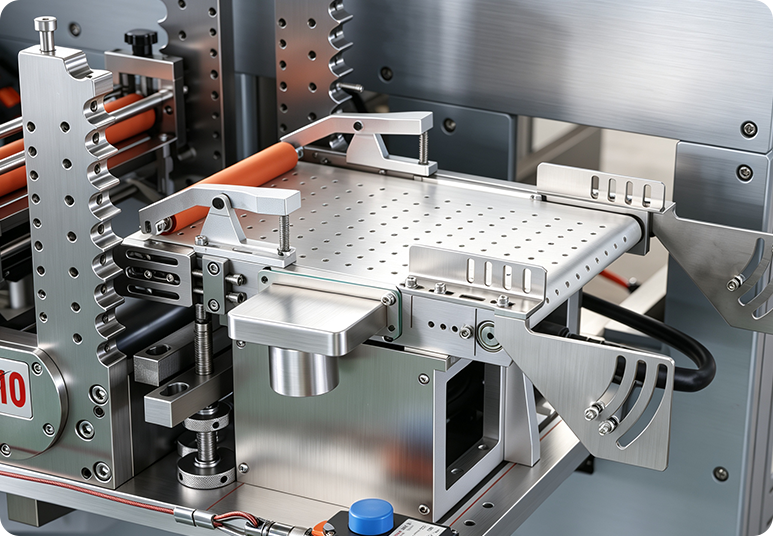
A push-rod action transfers the defective product onto a separate liner material, thereby removing it from the production line. Mainly suited to single-side adhesive products with a thickness of 2 mm or more. Advantages: does not damage the defective product, allowing for manual secondary inspection or verification.
ADHESIVE TAPE REJECTION

PRODUCT
OVERVIEW

Uses the tackiness of adhesive tape to lift defective products off the production line.

Suited to lightweight, easily-adhered products such as roll-fed labels.

VACUUM CONVEYOR REJECTION

PRODUCT
OVERVIEW

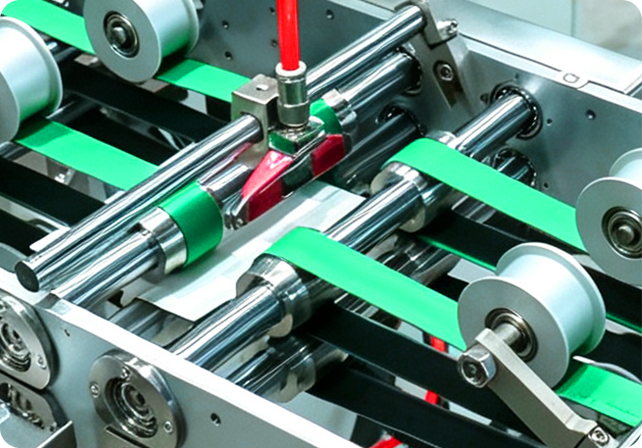
Products are conveyed by vacuum suction; defective products are released by an air blast. Suited to sheet or bag-form products with a thickness of 0.1-4 mm. This solution supports dual-lane products, with each lane independently rejectable and independently counted; lanes spacing is adjustable.

CUSTOM
SOLUTIONS

We understand that every production line is unique. Our engineering team works closely with you to design custom rotary die cutting solutions tailored to your specific needs:

PROJECT CONSULTING

PROTOTYPING

ON SITE TRAINING
24/7 SUPPORT

SPARE PARTS SUPPLY